
TL;DR: Industrial air filtration is essential for removing airborne contaminants, protecting workers, and maintaining efficient operations in industrial environments. This blog explores how industrial air filtration systems work, where they are used, and how to choose the right solution for your facility.
- Industrial air filtration systems remove dust, fumes, and airborne contaminants to deliver cleaned air
- Common industrial air filtration applications include welding, manufacturing, woodworking, and labs
- Solutions like dust collectors, fume extractors, and ambient systems improve air quality
- Proper industrial air filtration and ventilation helps meet safety regulations and reduce health risks
- Investing in industrial air filtration solutions enhances productivity, protects equipment, and supports long-term efficiency
In today’s manufacturing and production environments, industrial air filtration plays a critical role in protecting both workers and equipment. From controlling dust to removing hazardous fumes, the right systems help create safer, more efficient workplaces.
Whether you’re operating a small workshop or a large facility, understanding industrial air filtration systems—and how they work—can help you choose the best solution for your needs.
What Is Industrial Air Filtration?
At its core, industrial air filtration is the process of removing airborne contaminants from industrial air. These contaminants may include dust, smoke, fumes, vapors, and microscopic particles that can impact health, productivity, and product quality.
Unlike basic HVAC filtration, air filtration industrial systems are designed to handle higher volumes of pollutants and more demanding environments. These systems don’t just filter ambient air—they often capture contaminants directly at the source.
The goal is simple: deliver cleaned air back into the workspace while reducing exposure risks.
Common Industrial Air Filtration Applications
There are many industrial air filtration applications across different industries. Each comes with its own set of challenges and contaminants.
Some of the most common include:
- Metal fabrication and welding (fumes and fine particles)
- Woodworking (dust and debris)
- Manufacturing and assembly (mixed particulates)
- Pharmaceutical and laboratory settings (sensitive contaminants)
- Food processing (dust and airborne particles)
In each case, proper air cleaning is essential not only for worker safety but also for maintaining compliance and operational efficiency.
Types of Industrial Air Filtration Systems
Choosing the right system depends on the type of contaminants and the size of your facility. Here are the most widely used industrial air filtration systems:
1. Dust Collectors
A dust collector is one of the most common solutions in industrial environments. These systems are designed to capture and remove solid particles from the air.
They work by pulling contaminated air through specialized air filters, trapping dust while releasing cleaned air back into the environment. Dust collectors are essential in industries like woodworking, metal grinding, and powder handling.
2. Fume Extraction Systems
Fume extractors are designed to capture gases, smoke, and fine particulate matter produced during processes like welding or soldering.
These systems are a key part of industrial air filtration and ventilation, as they remove contaminants at the source before they spread into the broader workspace.
3. Ambient Air Filtration Systems
Unlike source capture systems, ambient units focus on filtering the surrounding air. They continuously cycle and clean ambient air, reducing overall contamination levels.
These are especially useful in large facilities where contaminants are already dispersed.
4. Multi-Stage Filtration Systems
Advanced industrial air filtration solutions often combine multiple filtration stages, including pre-filters, HEPA filters, and activated carbon filters.
This layered approach allows for the removal of both particles and gases, making it ideal for complex environments with varied contaminants.
Standards and Compliance
Industrial facilities must meet strict air quality regulations to ensure worker safety and environmental protection.
Organizations like OSHA (Occupational Safety and Health Administration) set exposure limits for various airborne contaminants, including dust, fumes, and chemicals.
Implementing effective industrial air filtration systems helps businesses:
- Maintain regulatory compliance
- Reduce health risks
- Avoid costly fines and downtime
Proper system design and maintenance are essential to meeting these standards consistently.
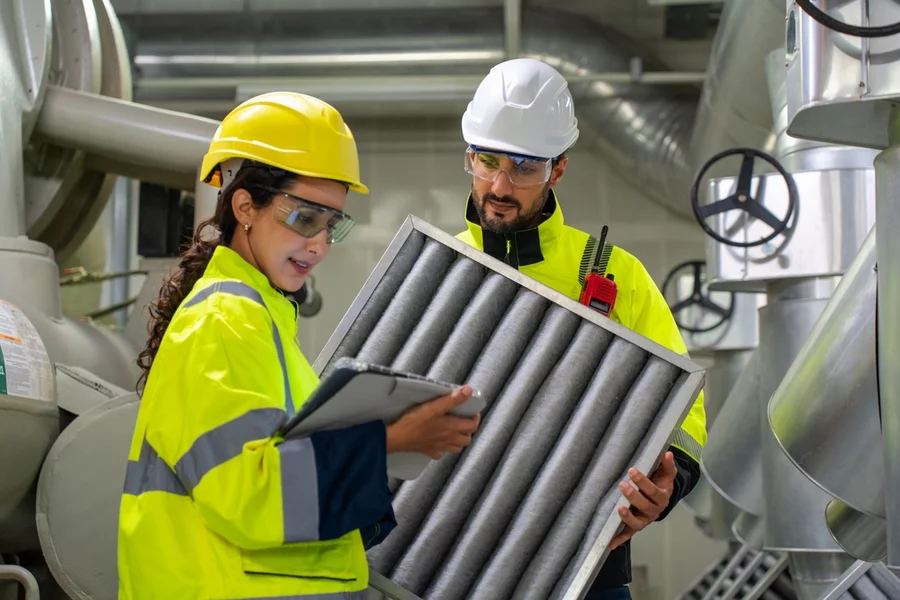
Benefits of Industrial Air Filtration
Investing in industrial air filtration solutions offers a wide range of benefits beyond compliance.
Improved Air Quality
The most obvious advantage is the ability to improve air quality. Cleaner air reduces the risk of respiratory issues and creates a healthier work environment.
Increased Productivity
When employees are not exposed to harmful industrial air, they can work more comfortably and efficiently.
Equipment Protection
Dust and contaminants can damage machinery over time. Effective air cleaning helps extend the lifespan of equipment and reduce maintenance costs.
Energy Efficiency
Modern systems are designed to optimize airflow and reduce energy consumption, especially when integrated with industrial air filtration and ventilation systems.
Choosing the Right Solution
Selecting the right system depends on several factors, including:
- Type of contaminants
- Volume of air needing filtration
- Facility layout
- Regulatory requirements
For example, a facility dealing with heavy dust may prioritize a dust collector, while a lab handling chemicals may require multi-stage filtration.
The best industrial air filtration solutions are tailored to your specific environment and processes.
The Bottom Line
Effective industrial air filtration is no longer optional—it’s essential for safe, efficient operations. From capturing dust to removing hazardous fumes, the right system ensures cleaner air, better compliance, and improved performance across your facility.
By understanding different industrial air filtration applications, system types, and standards, you can make informed decisions that protect both your workforce and your bottom line.
In the end, investing in proper air filtration industrial systems is an investment in healthier people, better products, and a more sustainable operation.